



Mental Health, Moral Life, and the Work of Staying in an Unequal World

Priyanka Chahal, MD


5 min

Health
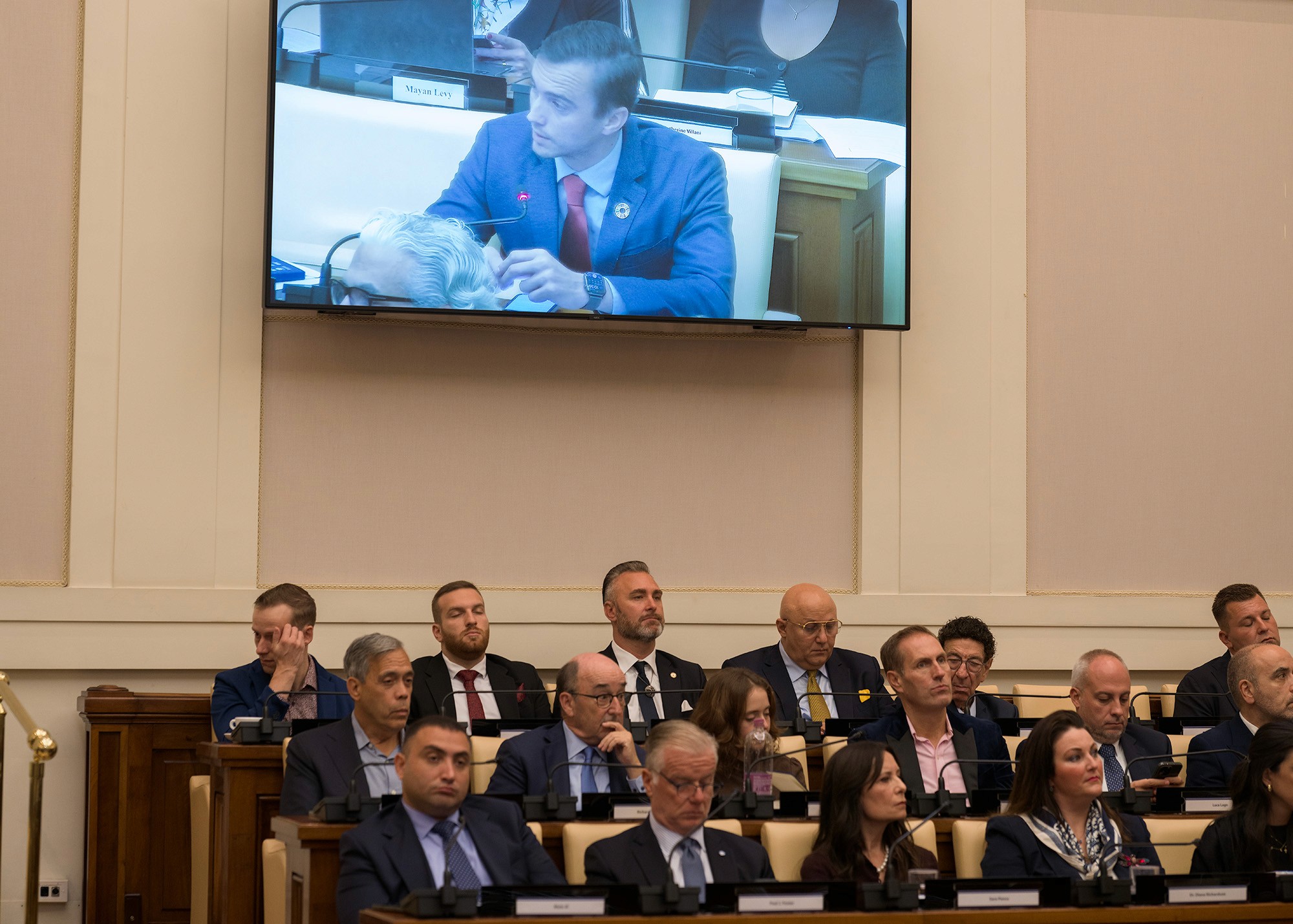
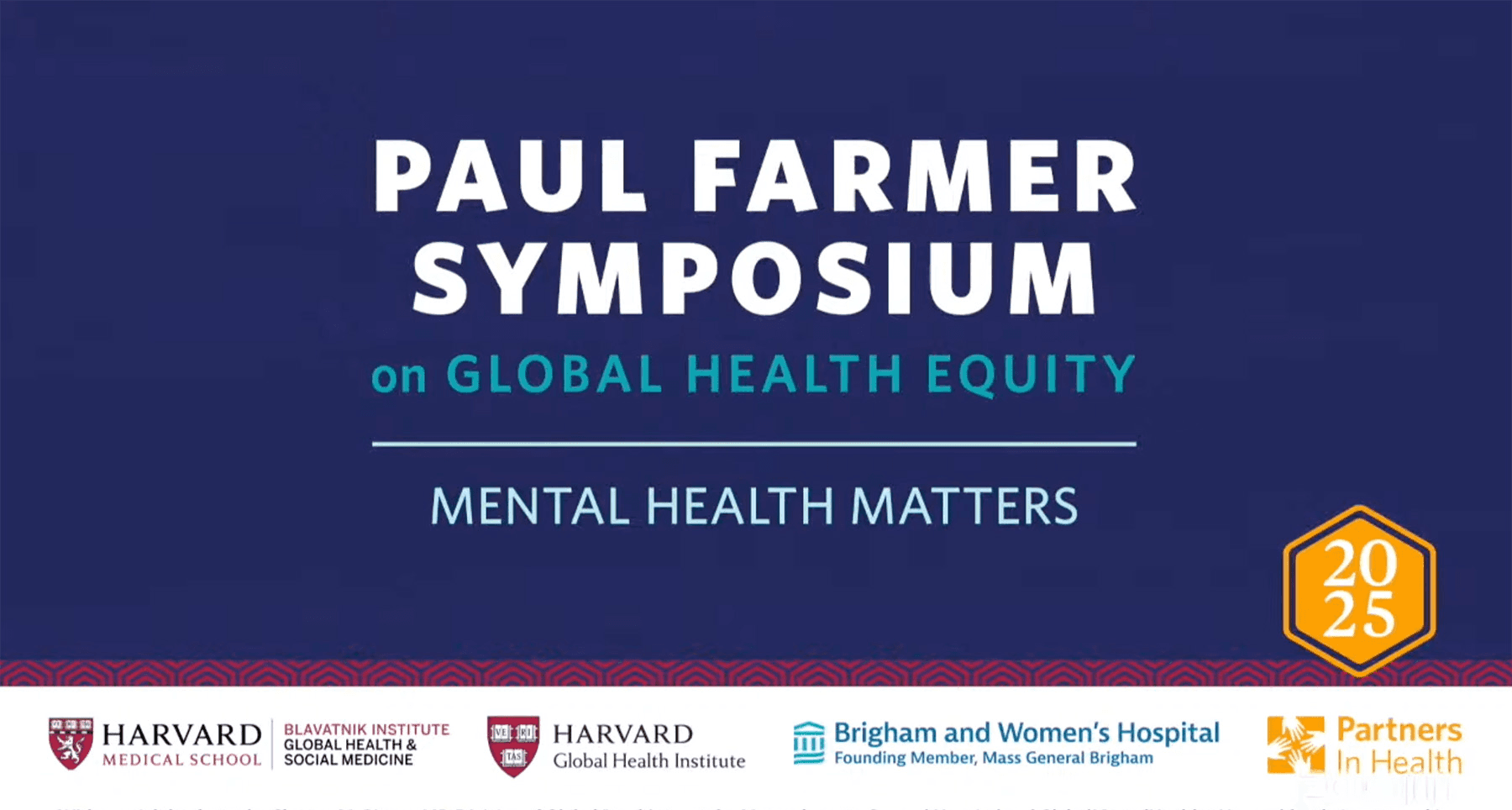
The global mental health crisis has grown so large that it stretches into every geography, every age group, and every social boundary. Yet its causes remain deeply intimate, rooted in the daily lives of people navigating poverty, loneliness, migration, conflict, discrimination, and uncertainty. When I sat inside the Joseph B. Martin Conference Center at Harvard Medical School for the 2025 Paul Farmer Symposium on Global Health Equity, held in collaboration with Harvard University, Partners In Health, the Harvard Global Health Institute, and Brigham and Women’s Hospital, I felt that I was not attending an academic gathering; I was stepping into a shared moral space. A space where mental health was no longer framed as a technical problem but as a human story unfolding across families, neighbourhoods, and entire societies.

This year’s symposium drew its conceptual grounding from the mental health issue of Dædalus, the Journal of the American Academy of Arts and Sciences, whose editors call mental health “a crisis of our collective arrangements as much as our inner lives.” Their words set the tone for the day. We were being asked not to think of mental illness as an individual failing or biological misfortune, but as something shaped by the structures under which people labour: the violence of poverty, the instability of displacement, the silence of stigma, the burden of conflict, and the grinding force of inequity. Dr. Paul Farmer’s legacy hovered above every conversation, his lifelong insistence that structural violence shapes who suffers and who heals. His belief that “some lives seem to matter less” not because of fate but because systems are designed that way.
Before the discussions even began, the opening framing gently reminded us that “some gatherings arrive at the right moment in your life, when you suddenly feel the weight of your own thoughts and the presence of everyone around you. I realized that mental health is not only about what we feel inside, but also about the worlds we move through and the people who stand with us. It is shaped by the stories we inherit, the struggles we do not name, and the strength we learn from each other. It is carried in the way we hold our pain, and in the way others help us bear it. And sometimes healing begins simply by being met with understanding.” Mental health is always both personal and collective, an inner experience shaped by social worlds.
The opening panel reflected the global and community rooted dimensions of this truth. Dr. Theresa S. Betancourt, whose decades of research span Rwanda, Sierra Leone, and the U.S., offered a portrait of childhood adversity that was neither simplistic nor clinical. She described how trauma forms a constellation around children, poverty stitched to displacement, loss interwoven with stigma, violence layered with structural neglect. Her book, Shadows Into Light, argues that resilience is not a trait children magically possess; it is nurtured when societies choose to support families with care, safety, and predictability. Listening to her, I was reminded that mental health begins long before a child speaks of fear or sadness, it begins in whether the world around them is safe enough to grow in. Her words made it clear that global mental health is ultimately a reflection of global moral priorities.

From another corner of the world came the voice of Carmen Contreras, a psychologist who has spent 22 years with Socios En Salud, PIH’s sister organization in Peru. Contreras spoke with a grounded tenderness that only long-term accompaniment can produce. Her stories of adolescents navigating stigma, social isolation, gendered expectations, and everyday uncertainty revealed how healing often begins in small spaces: the kitchen table conversation, the doorway meeting between a health worker and a parent, the safe moment when a young person finally admits they are struggling. She reminded us that mental health systems succeed only when they honour the existing wisdom of communities. Hearing her speak, one could feel Farmer’s belief in accompaniment moving quietly through the room.
Adding a different but deeply complementary lens was Dr. John A. Naslund, whose work in digital mental health bridges community realities with technological innovation. His research reveals that digital tools become meaningful only when they preserve dignity, privacy, and human connection. In India and across low-resource settings in the U.S., Naslund’s studies show that digital peer-support groups or remote care models work only when they are built with communities, not imposed upon them. He reminded the room that innovation is most powerful when it listens. Without trust, he said, no technology, no matter how advanced, can widen access to care. It struck me that in a world obsessed with efficiency, Naslund was quietly advocating for something revolutionary: technology designed around humanity rather than the other way around.

As the afternoon unfolded, the conversation shifted to the structural and political forces that either support or undermine mental health. Dr. Joia Mukherjee, clinician, educator, human rights advocate, and Director of the MMS Global Health Delivery program at Harvard Medical School, framed mental health as an issue of equity and rights. Her decades of work across Haiti, Rwanda, Liberia, and Russia have taught her that systems do not fail accidentally, they fail along predictable lines of discrimination, underfunding, and moral indifference. In her book An Introduction to Global Health Delivery, Mukherjee writes that health systems must be “systems of care, not exclusion,” and her reflections at the symposium sharpened that message. She insisted that mental health cannot be siloed or treated as an optional add-on; it is the emotional backbone of society, and ignoring it is a political choice.
Dr. Pamela Y. Collins, a leading scholar at Johns Hopkins, carried this argument into the realities of cities, those dense social ecosystems where vulnerability is produced through racism, housing insecurity, gendered risk, structural stigma, and chronic uncertainty. Collins explained that stigma is not merely psychological; it is built into policies, zoning, social services, and institutions. When adolescents in urban spaces experience mental illness, their suffering is often amplified by surroundings shaped by inequity. Her work makes one thing painfully clear: mental health cannot be separated from everyday life. It is inseparable from the neighbourhood, the bus route, the experience of policing, the availability of safe housing, and the quiet violence of urban neglect. Through her research, Collins pushed us to see mental health as a societal responsibility rather than an individual burden.
And then the conversation widened further when Dr. Jim Yong Kim spoke, physician, global health leader, former President of the World Bank, and Co-Founder of Partners In Health. Kim has long argued that global health financing reflects global moral failure, and his reflections at the symposium were a powerful reminder of this. Health systems, he suggested, are “not broken, they are designed,” and too often they are designed to fail those with the least political and economic power. From his work scaling HIV care in Haiti to his leadership at the World Bank, Kim has seen firsthand how mental health is consistently underfunded, undervalued, and miscategorized as secondary. He called for bold system redesign rooted in community health workers, integrated primary care, and the political courage to prioritize the poor. His conviction, that mental health is indispensable to a functioning society, was both analytical and deeply moral.

But the emotional center of the symposium came from Dr. Arthur Kleinman, psychiatrist, anthropologist, and author of The Illness Narratives and The Soul of Care. Kleinman’s keynote was not an academic lecture; it was an offering of vulnerability. He spoke about caregiving, not as sentiment but as a form of moral life. He described the years he cared for his late wife Joan, and how those years reshaped his understanding of what it means to accompany someone through suffering. “Caregiving,” he said softly, “is the work of staying, staying when staying is difficult.” His words made the entire room still. Here was someone who had spent fifty years studying illness, ethics, and humanity, telling us that care cannot be measured by efficiency or scaled by metrics. It must be rooted in presence, humility, and moral imagination. Listening to him, I felt that his message represented the deepest layer of Farmer’s legacy: that accompaniment is not a method, it is a promise.
As the symposium came to an end, the atmosphere carried a mix of heaviness and hope. Heaviness because the global mental health crisis is immense and deeply rooted in structural injustice. Hope because the conversations, spanning research, community wisdom, digital innovation, urban mental health, policy, and caregiving, revealed that change is possible when societies choose to act with courage. Mental health is not a side issue; it is the emotional infrastructure of the world. It reveals whether a society is organized around care or neglect. It exposes whether policymakers see people as fully human or as optional. And it challenges us to build a world where accompaniment is not exceptional but expected.
Faces of Impact, in its mission to elevate stories from the ground, resonates deeply with these lessons. Stories have the power to restore dignity, to challenge stigma, to open moral imagination, and to remind us that suffering deserves response. Our work is rooted in the belief that narrative is itself a form of accompaniment, a way of saying, “Your life matters, and we are listening.” In that sense, the Paul Farmer Symposium is not simply an annual event; it is a mirror. A reminder of who we are and who we must become.
The symposium asked us to imagine mental health care not as a system of referrals and diagnoses, but as a collective responsibility. A responsibility to build structures that do not abandon people in their moments of fragility. A responsibility to address the injustices that create predictable patterns of suffering. And a responsibility to stay, to remain present, humane, and accountable. If we carry forward even a fraction of Paul Farmer’s conviction, then we are already on that path.
And perhaps that is the truest legacy of this symposium: a call to build a world where no one walks through their suffering alone.

"We are grateful for the improved facilities. Teaching is now more effective, and students are more engaged than ever."
— Michael Hayes